In 1992, Bosnia and Herzegovina (BiH) declared independence following the breakup of Yugoslavia. Three and a half years of war followed soon after, as the three main ethnic groups – Croats, Serbs and Bosniaks – fought each other. On 14th December 1995, the Dayton Peace Agreement brought an end to the bloodshed. But as with all wars, scars were left, some physical, some emotional and they are still felt today. We can only imagine what these people have been through.
Today, the peace agreement is under real threat. BiH is a country with a complex political structure. All three ethnic groups have leaders who shape the country’s politics. Each group has become increasingly more concerned with the advancement of their own group, rather than that of the country as a whole and the fear of another war has become very real. Tensions are at their highest peak since peace was declared.
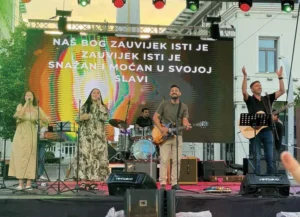
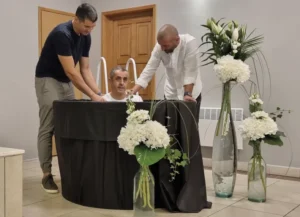
To make matters worse, BiH is experiencing high levels of Covid-19. The economy is suffering due to the pandemic but also because there is a trend for people of working age to migrate abroad to seek better opportunities. This, in turn, has directly impacted the church. Despite the best efforts of faithful Christians to share the gospel, church leaders are seeing little growth. Pastor Dragan Nedic of Sarajevo Evangelical Church writes, “Our churches are in most of the cases smaller than twenty years ago.”
Please pray for:
- The political situation and that all the people of BiH would remember that peace is far better than war
- Covid-19 cases to decrease, for the virus to stop spreading, for those infected to be healed and for support for the struggling healthcare system
- The economy
- Our partners, Ljiljana Banicek and Sinisa Stojkovic in Banja Luka; Slavko Hadzic, Dragan Nedic and Tomislav Dobutovic in Sarajevo and Dario Kapin in Zenica and Derventa
- Spiritual revival and for Christian leaders to be equipped and encouraged as they see lives transformed by the gospel of Christ – the gospel of peace.
Article written by Naomi Greenwood, TEN